THE BLACK CAPITALIST
A Shawn "JAY-Z" Carter case study

Before I begin this essay, allow me to glaze a little bit. I love JAY-Z. I’ve loved HOV since I was 8, 9 years old. Vivid memories of coming home from school and “Hola Hovito” playing in my brother’s room. I grew up on his music. On his interviews. I’d jot down JAY-Z lyrics instead of paying attention in school. I might love HOV more than I love my dad. My first CD collectible is a JAY-Z album. Every phase of my life, regardless of my circumstances, I’m on HOV’s music. When people ask me which church I attend, I say Roc Nation. We worship JAY-Z and Beyoncé.
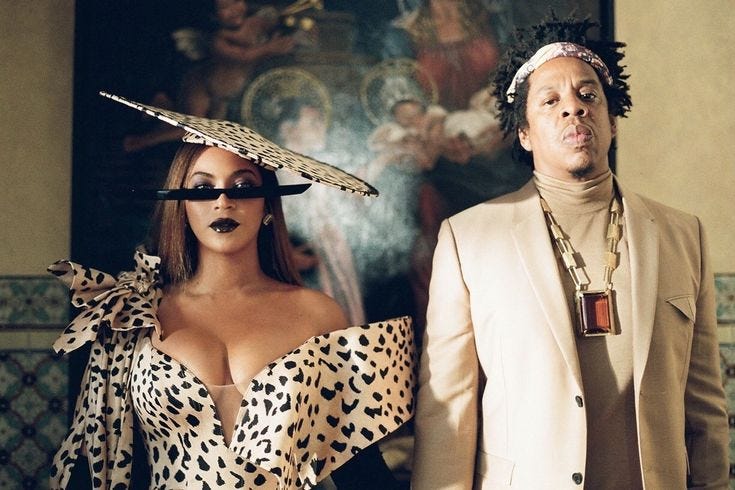
The journey of JAY-Z from Marcy Projects housing complex to a position as one of the world’s most influential businessmen and a defining cultural voice of his generation is more than a rags-to-riches story. It is a profound and complex case study in Black capitalism. JAY-Z has meticulously crafted an identity that merges the hustler’s intuition from his past with the boardroom acumen of his present, using his music and public persona to articulate a philosophy where financial empowerment is presented as the ultimate form of Black liberation and personal redemption.
JAY-Z’s narrative is rooted in the foundational myth of the hustle. His early lyrics are not just about surviving the crack epidemic of 1980s Brooklyn; they are detailed ledgers of a brutal, informal economy. In his 1996 debut, Reasonable Doubt, he wasn’t merely a drug dealer but a CEO in training. On “Can I Live,” he raps, “I’m not a businessman, I’m a business, man,” a line that would become the cornerstone of his entire brand. This declaration reframes his illicit activities as a corporate enterprise, highlighting skills such as supply chain management, risk assessment, human resources, sales, that would later be laundered into legitimate success. The persona of “Jay-Hova” was built on this seamless translation. The street hustler and the corporate raider are, in his cosmology, two expressions of the same relentless ambition. This connection is made explicit in interviews; as he told Forbes, “I sold drugs for the same reason I sell albums, it’s a product and I’m pushing it.” This framing demystifies big business, presenting it not as an inaccessible white-collar world but as a more sophisticated, less lethal version of the game he already knew.
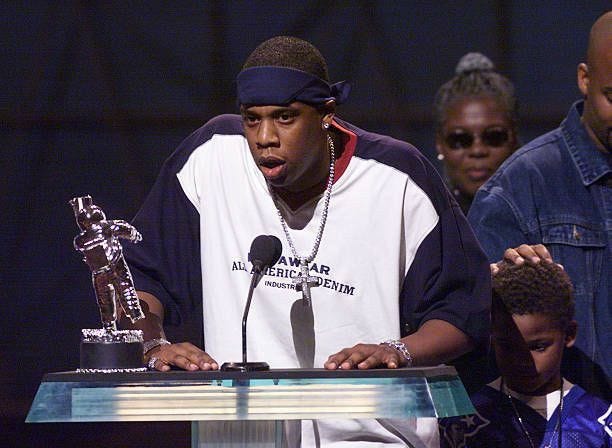
This evolution from product-pusher to owner is the central tenet of JAY-Z’s philosophy. His public break from the corporate music industry was a masterclass in this principle. After achieving massive success with Def Jam, he became its president, only to leave and launch his own Roc Nation label. This move was a real-world enactment of his lyrical boasts. On 2007’s “The Prelude,” he dismisses his former corporate overlords: “You on the paper chase? Well, so am I / But I’m on the paper chase, the ownership, the whole pie.” The “paper chase” is universal, but JAY-Z redefines the finish line not as wealth alone, but as equity and control. His ventures, Roc-A-Fella Records, Rocawear clothing, the 40/40 Club sports bars, Tidal, and now the cannabis and spirits industries, are not a random portfolio. They are a deliberate strategy of vertical integration within Black culture, an effort to own the means of production for the art, fashion, and lifestyle he helped popularize. He articulated this directly in a 2021 interview with The Sunday Times, stating, “It’s not about the money at all. It’s about the independence. It’s about building this whole ecosystem.”
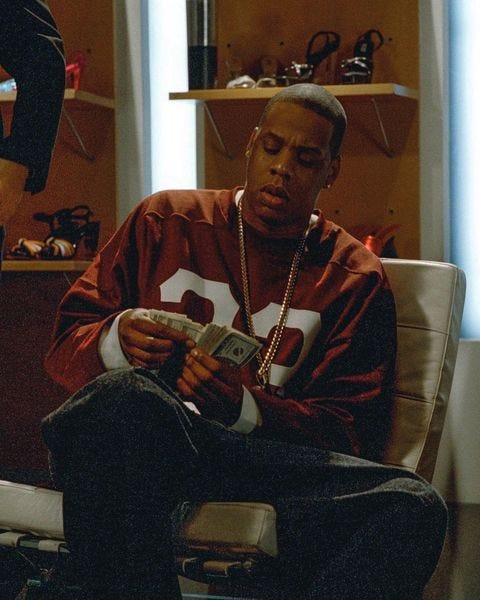
This pursuit of ownership is linked to a broader political vision of Black economic empowerment. JAY-Z positions financial literacy and wealth accumulation as the next frontier of the civil rights movement. In “Legacy” from his album *4:44*, he speaks directly to his daughter, Blue Ivy: “You’re my child with the child of a child / That’s the whole reason I’m mobbin’ with y’all / Generational wealth, that’s the key.” Here, the “mobbin’” is no longer a criminal endeavor but a multi-generational business strategy aimed at breaking cycles of poverty. This philosophy moves beyond protest to proactive institution-building. His partnership with the NFL, while highly controversial, was justified in these terms. He defended it by saying he saw it as an opportunity to “take action” and “make real change” from a position of influence, moving the conversation from “the streets to the boardroom.” This stance is emblematic of his belief that power is not just demonstrated through opposition but through infiltration and control of the very systems that have historically excluded Black people.
However, the figure of the Black capitalist is not without its profound contradictions, and JAY-Z’s career embodies them all. Can one truly be a revolutionary force while operating within, and ultimately reinforcing, a capitalist system built on exploitation? His critics argue that his narrative of “getting the whole pie” can devolve into a simplistic celebration of hyper-individualism. It risks framing systemic inequality as a problem to be solved by a few exceptional individuals “making it,” rather than through collective action and structural reform. This tension is palpable in his music. On “The Story of O.J.” he delivers the powerful, sobering mantra, “Financial freedom my only hope / Fuck livin’ rich and dyin’ broke.” Yet, the same song’s video, with its troubling caricatures, and the reality of his own immense wealth, create a dissonance. Is he critiquing the system or merely mastering it for a select few? The critique is that his model of empowerment is inherently exclusive; not everyone can be JAY-Z, and a philosophy that centers on individual ownership does little for the collective masses left behind in the very projects he escaped.
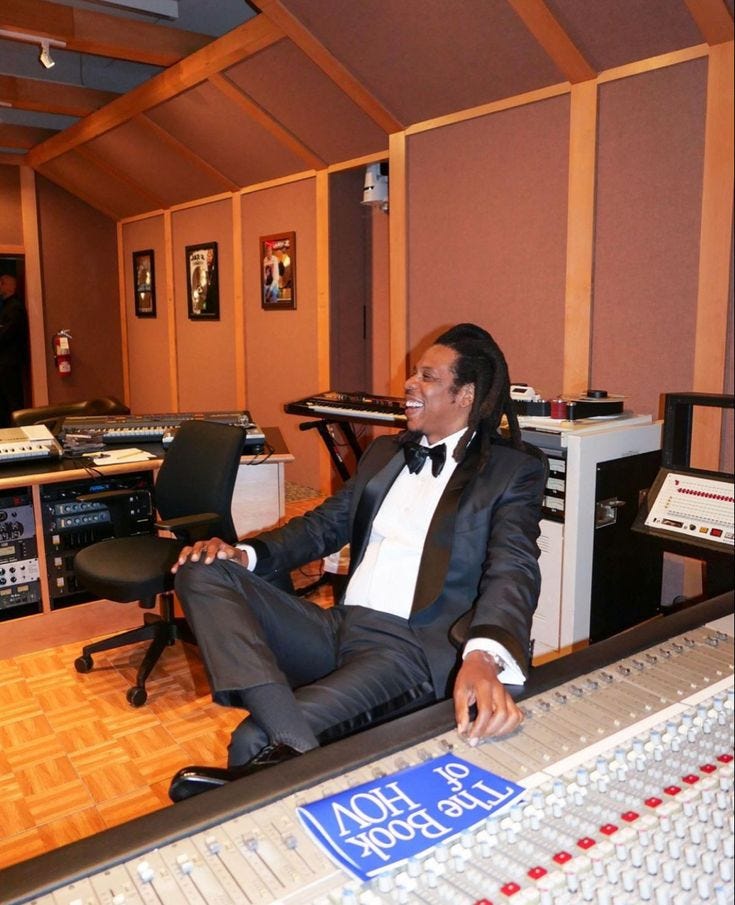
Moreover, his role as a philanthropist and social advocate exists in a complex dance with his capitalist pursuits. His work with the REFORM Alliance to change probation and parole laws, or his bail fund initiatives, demonstrates a commitment to social justice that complicates a purely profit-driven image. Yet, the source of the capital that funds this philanthropy is often corporate and entangled with the same carceral and economic systems his advocacy seeks to dismantle. This is the central paradox of the “woke capitalist”: the tools of liberation are funded by the very system that necessitates it.
His journey is a meticulously documented argument, told through platinum records and billion-dollar deals, that economic power is the most potent form of agency in modern America. He has reframed the hustler as a proto-CEO, ownership as liberation, and generational wealth as the ultimate civil rights victory. Yet, his legacy is a dialectic, a continuous and unresolved debate. It champions self-determination while risking the valorization of an inequitable system; it promotes Black excellence while sometimes overshadowing the need for collective uplift. JAY-Z is not merely a successful Black businessman; he is the philosopher-king of a specific, potent, and deeply contested ideology. He has forced a conversation about what true power looks like for Black people in the post-civil rights era, proving that the most radical act can sometimes appear, on the surface, as the most conventional: not just to have money, but to own the bank.