hugo
by Loyle Carner

I love Loyle Carner. I been saying it for a while now, but I think he’s miles ahead of a lot of UK rappers. Your favorites. I may have implicit bias because I don’t think there’s an artist out there I’ve ever related to on such a personal level. As someone who struggles with ADHD as well, where music is the only thing, other than my loved ones, where I can completely focus. Where my attention is completely held. His music is defined by a quiet, soulful introspection. “hugo”, which is his third studio album, was released in October 2022. I had just joined Uni at the time. I listened to it, then I didn’t come back to it till like early 2024. I’d listen to it every chance I get. I still do. The album focuses on a man grappling with the weight of fatherhood, the fractures of his mixed-race identity, and a newfound, seething anger at the structural injustices of the world. I think it’s a masterfully constructed album.
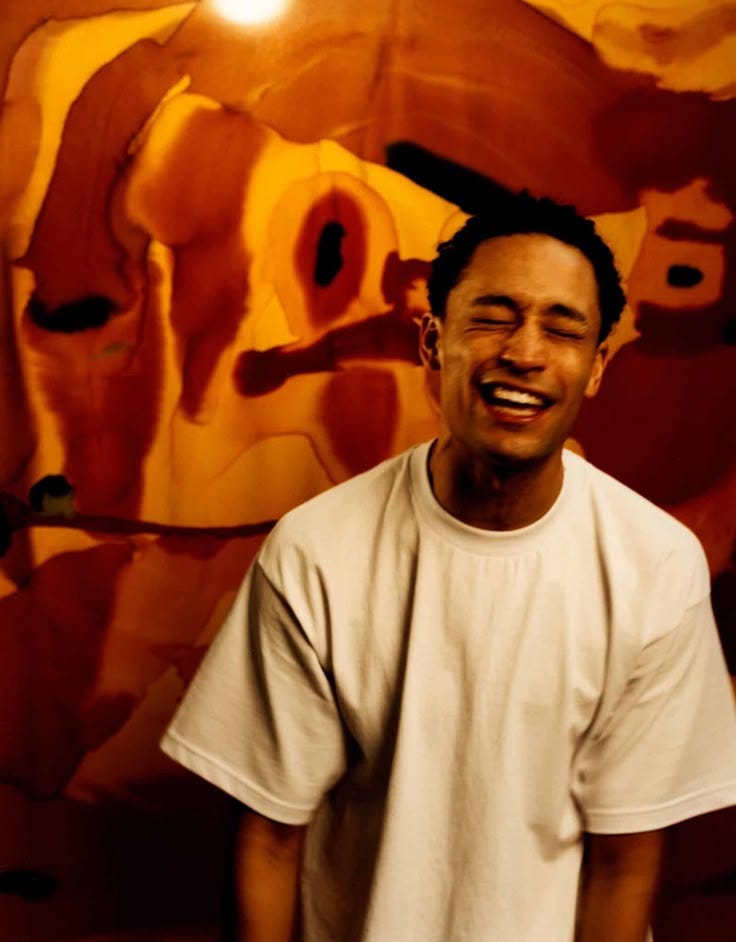
The Rage of confronting Race and Class
The album’s first track, “Hate”, is a declarative statement of intent, built on high tempo drums and a dragging bass line that sets a precedent of rage. He is no longer just observing the world, but actively confronting it’s hostility. The song is a direct examination of systemic racism in post-Brexit Britain, a theme that permeates the album’s core . Carner articulates the frustrating reality of being pigeonholed by society, rapping, “They said it was all that you could be if you were black, Playing ball or maybe rap.” This line cuts to the heart of the limited expectations placed upon young Black men, a structural straitjacket that Carner, despite his success, refuses to ignore.
This anger is not a vague, abstract concept but is rooted in the specific experience of being mixed-race in the UK. His mom white and his dad black. Dad’s from Guyana. The brilliant single "Georgetown," produced by hip-hop royalty Madlib, samples the late Guyanese poet John Agard and his seminal work "Half-Caste." By the way, tell me another UK rapper who’s got a Madlib produced song. You can’t. This nigga’s my goat man. Him and Nines. Carner uses the track to dismantle the logic of being considered only “half” of something, a sentiment that leaves him feeling stateless. This feeling of in-betweenness is very well captured on "Nobody Knows (Ladas Road)," where he laments his outsider status from both sides of his identity: “I told the black man, he didn’t understand. I reached the white man, he wouldn’t take my hand.” He was made to feel like he’s too white to be black, too black to be white. This album is inherently political, but it makes it sound so fuckin good that you even forget it’s political.
This political lens extends to a sharp critique of class and violence. "Blood On My Nikes" is arguably the album’s most harrowing track. A haunting, cinematic retelling of a murder Carner witnessed as a sixteen-year-old. It is also in my opinion one of the best tracks on the album. Loyle Carner grew up in South London. He’s been through a lot as you can imagine. The ominous horns and Carner’s tense delivery paint a picture of a London paralyzed by fear, “So I grew up scared of the night bus, Scared of the boys who looked like us.” The song culminates in a powerful spoken word segment by teenage activist Athian Akec, which directly indicts the government for its failure to protect its youth from the epidemic of knife crime. Tracks like “Plastic” further this class critique, taking aim at the hollow materialism and disingenuousness he sees around him, contrasting the performative nature of "plastic watches" and "plastic whips" with the authentic struggle for survival and identity that defines his reality. “Look at all your plastic shit.”
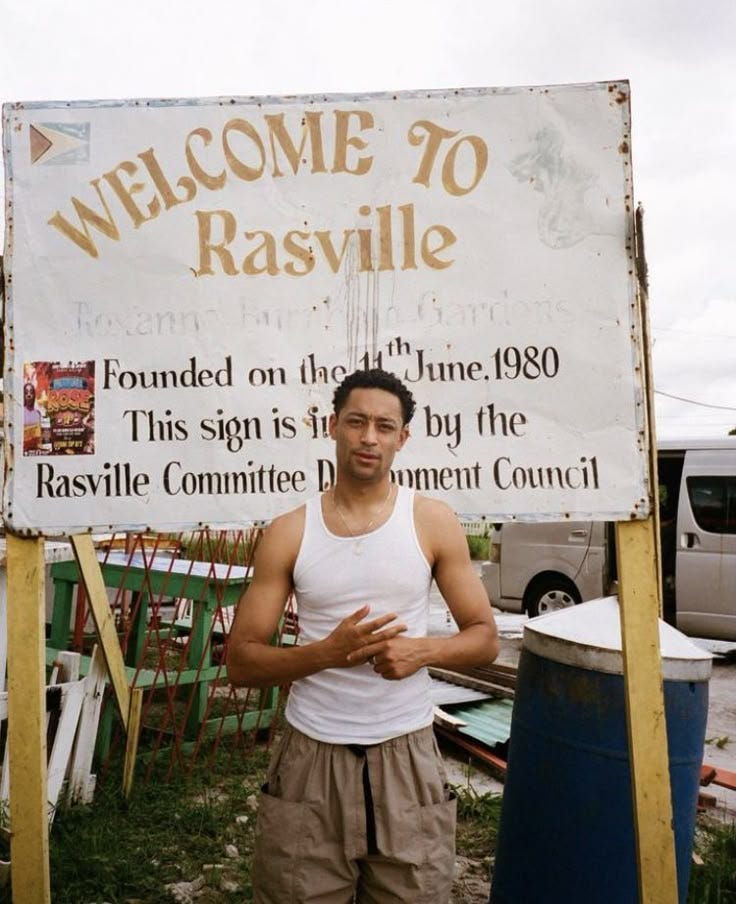
The Father and the Son: Breaking Cycles.
The second half of the album dissects the most foundational relationship of Carner’s life, that with his biological father. From my understanding, his father was absent for most of his life. It was during the pandemic that they reconnected. Carner learned of his father’s own traumatic upbringing in a care home, “with no understanding of what it was to be a father or to love anyone.” This revelation was pivotal. It allowed Carner to reframe his father’s absence not as malicious abandonment, but as the tragic inheritance of a broken cycle. This reframing is the engine that drives the album’s narrative. In “Nobody Knows (Ladas Road),” amidst the confusion of his identity, Carner poses the crucial, rhetorical question that unlocks his path to healing, “So how can I hate my father, Without hating me?” It is a moment of profound clarity. This idea culminates in the album’s breathtaking closer, “HGU.” The track is a raw masterpiece where Carner directly addresses his father. The inflection in his voice as he repeatedly states “I forgive you” carries the weight of years of hurt, confusion, and ultimately, release. If it wasn’t for this track specifically, I don’t think I would have even attempted to have a close relationship with my father. The song ends with a recorded conversation between Carner and his father. A fragile, authentic audio document of two men tentatively bridging a lifelong gap. It is a moment of emotional breakthrough that feels both private and universally resonant.
The reason he does his best to reconciliate with his father is because he has been thrust into fatherhood as well. He doesn’t even know how to drive. He is no longer just a son mourning a stepfather, (his stepfather passed away, as explored in previous albums) but a father himself, aware of the patterns he might replicate. In “Polyfilla,” he ruminates on how trauma can be unconsciously passed down, acknowledging how “sometimes you can't help but slip into reenacting your own trauma on those around you.” The process of forgiving his own father becomes an act of defiance, a conscious effort to “break the cycle of dysfunctional fatherhood” and ensure his son has access to a healthier, more complete legacy, including his Black heritage.
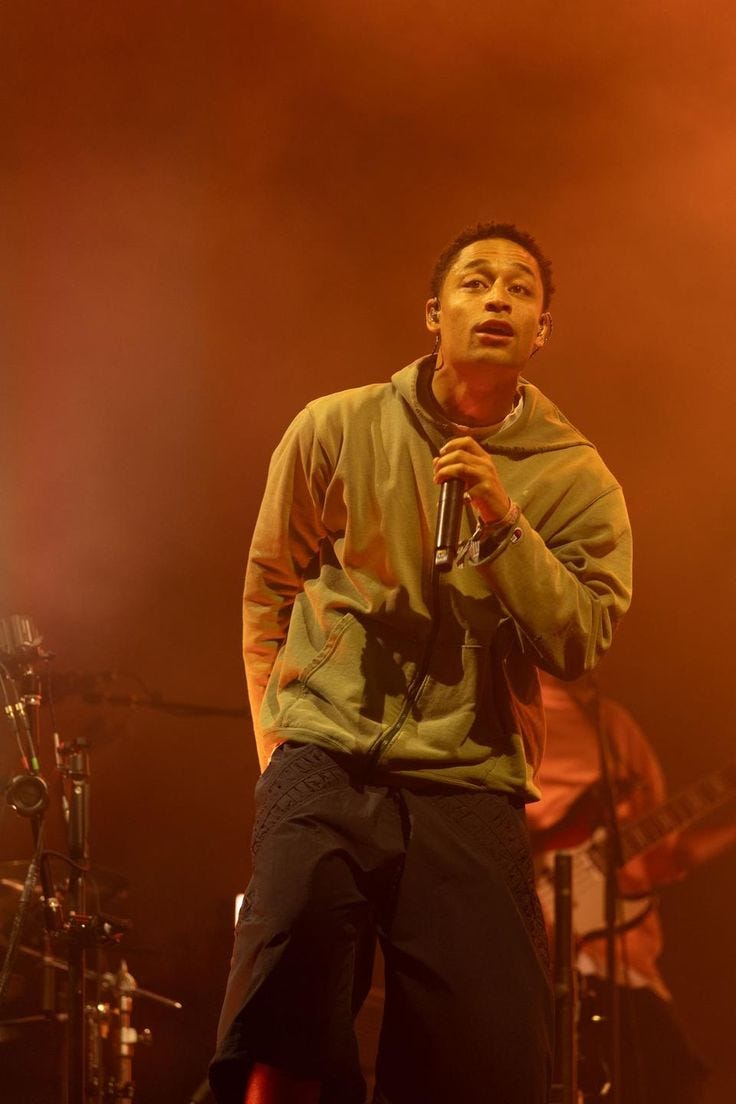
The Music of “hugo”
Carner and his primary producer, the London-based Kwes, construct a soundscape that mirrors the album’s internal turmoil. The music is fragmented and evanescent, often feeling as raw and unsettled as the emotions Carner describes. Beats are sparse, samples are degraded, and the overall effect is one of purposeful restraint. This is not music for the background; it demands attention, its minimalism serving to highlight the density of the lyricism.
On tracks like “Hate,” the frenetic percussion and dragging bass create a sense of claustrophobia and urgency. Conversely, on songs like “Homerton,” the shift to an intimate jazz session featuring keys, provides a space for reflective pensive thought. The sequencing itself seems to follow an emotional arc, moving from the antagonistic, jazz-fused energy of the opening tracks to the more melancholic, introspective ballads of the second half. This musical journey mirrors the psychological journey from anger to sadness to acceptance.
I was also introduced to amazing artists on this album. JNR WILLIAMS, Wesley Joseph are artists who entered my radar and I keep an eye on from time to time. I also got put on people like Kofi Stone because of this album. This was the first time I heard Olivia Dean. On the track “Homerton” she delivers an amazing hook. I really liked her feature. I’d blurt out the words to her hook from time to time. Just as the rest of the world, I didn’t pay much attention at the time. I’m paying attention now. She’s one of my favorite artists right now.
Again, I emphasize. A Madlib produced track on a UK rapper’s album. No one can chat to Loyle Carner.
Well said brother. Try out Tom Misch , start with Angel- which has both Loyle and Tom. Might melt your ears but that's the whole point.